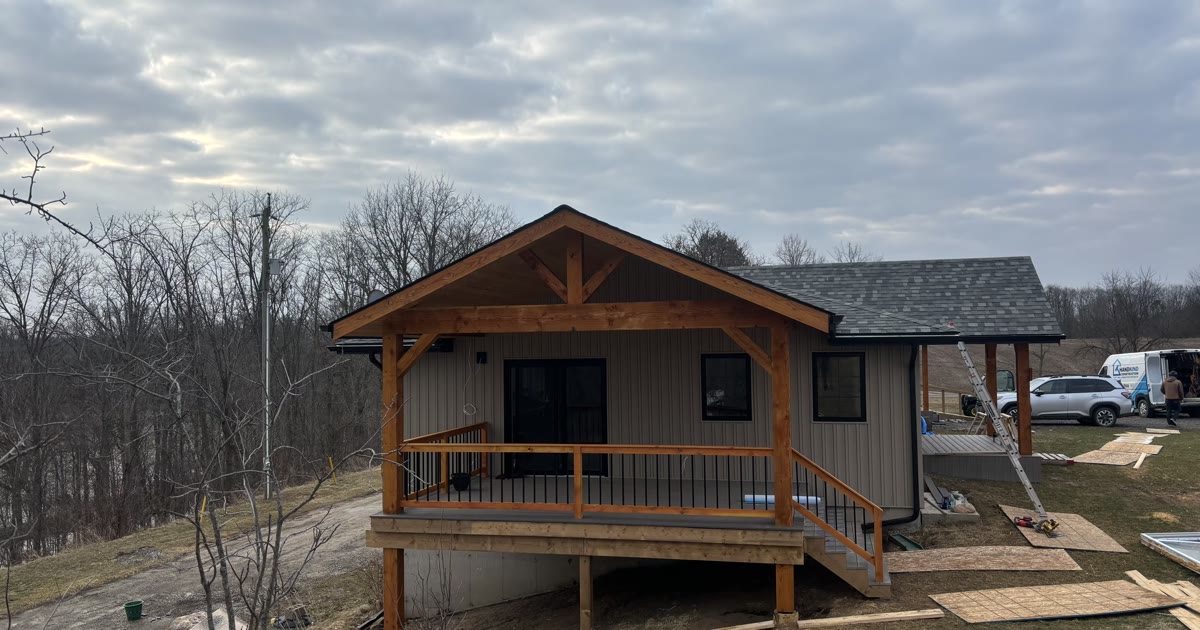
Additional Residential Units — ARUs — have become one of the most requested projects we get calls about in Brantford and Brant County. The combination of a tight rental market, new provincial legislation that makes it easier to build secondary suites, and the long-term financial case for adding rental income to your property has moved ARUs from a niche project to a mainstream one.
If you're thinking about building an ARU in Brantford, this guide covers what you actually need to know — what qualifies as an ARU, how the City of Brantford permits them, what different ARU types cost, and why the process goes wrong for homeowners who try to navigate it without professional help.
What counts as an ARU in Brantford?
An ARU (also called a secondary suite, accessory dwelling unit, or additional dwelling unit) is a self-contained residential unit on the same property as a main dwelling. In Brantford and Brant County, this typically means one of three things:
- Basement suite. A self-contained unit in your existing basement with its own entrance, kitchen, bathroom and sleeping area.
- Interior conversion. Converting part of your main floor or second floor into a separate unit — common in larger homes.
- Detached ARU. A separate structure on your property, sometimes called a garden suite or laneway house. These are typically more expensive but offer the most separation for both homeowner and tenant.
As of 2024, Ontario's More Homes Built Faster Act made it significantly easier to build ARUs by restricting municipalities from prohibiting them in residential zones. Brantford and Brant County have updated their zoning bylaws accordingly, though specific setback requirements, maximum unit sizes and design standards still apply depending on your lot and zone.
The permitting process in Brantford
An ARU in Brantford requires a building permit. The permit application typically includes architectural drawings showing the proposed layout, compliance with Ontario Building Code (OBC), fire separation between units, egress windows or doors, and confirmation of separate utility connections or shared metering.
Permit timelines from the City of Brantford for residential projects have typically run 4–10 weeks for a straightforward ARU application, though this can change — confirm the current target with the Building Division before planning your schedule around it. More complex projects or those requiring zoning variances take longer. We manage the permit application on your behalf as part of every ARU project — including responding to any comments or revisions the building department requests.
One thing homeowners consistently underestimate: the drawings required for a permit aren't something you sketch on a napkin. You need dimensioned architectural drawings prepared by someone who understands OBC compliance. We work with a small number of trusted designers in Brant County who know what the local building department expects and how to get applications approved efficiently.
What does an ARU cost in Brantford?
ARU costs in Brantford vary widely depending on type and scope:
| ARU Type | Typical range (2026) | Key variables |
|---|---|---|
| Basement suite conversion | $80,000 – $130,000 | Ceiling height, plumbing location, egress |
| Interior conversion (main floor) | $90,000 – $150,000 | Scope of separation, entrance creation |
| Detached garden suite | $175,000 – $300,000+ | Size, foundation type, servicing |
These ranges include design, permit fees, construction, and all required trades. They do not include any financing costs, landscaping, or furniture. Basement suite conversions tend to generate the strongest return relative to project cost for most Brantford homeowners, since the foundation and shell already exist — though the right project depends on your lot, your budget, and what the space is for.
The rental income math in Brantford
Based on current rental listings we've reviewed in the Brantford market as of mid-2026, a well-finished basement suite has rented in the approximate range of $1,400–$1,900/month depending on size and location, and a detached garden suite in the range of $1,800–$2,400. Using $1,600/month as an illustrative midpoint for a basement suite: that's $19,200 in gross annual rental income. On a $100,000 project cost, that works out to roughly a 19% gross return — before expenses, financing costs, vacancy, and management time, and not a net return figure. Actual rents and returns vary by unit, tenant, and market conditions; run your own numbers with a mortgage broker or accountant before treating rental income as guaranteed.
The financial case for an ARU in Brantford has never been stronger. Rental vacancy rates are near-historic lows and the province has actively removed barriers to building secondary suites.
Common mistakes homeowners make
The biggest mistake we see is homeowners starting construction without permits — either because they don't know they're required or because they're trying to save money. An unpermitted ARU cannot be legally rented, and when you sell the property, an unpermitted secondary suite often has to be demolished or brought into compliance at significant cost. The permit process exists for good reasons, and bypassing it is almost never worth it.
The second common mistake is underestimating the complexity of OBC compliance for secondary suites. Fire separation requirements between units, egress requirements, separate electrical panels, ventilation — there are a lot of moving parts, and getting them wrong on the first permit submission adds months to your project timeline.
Getting started with an ARU in Brantford
If you're seriously considering an ARU in Brantford or Brant County, the right first step is a site assessment — not a Google search. Every property is different. Ceiling heights, existing mechanical locations, lot size and setback requirements, and the condition of your foundation all affect what's feasible and what it will cost.
We offer free on-site consultations for ARU projects. We'll walk your property, tell you honestly what's achievable and what the rough cost range looks like, and outline the permit process specific to your zone and municipality. No commitment required.
For more on this topic, see our home additions & ARUs services page.
See this in a real HandKind project

Also worth reading:
- Basement Finishing Cost in Brantford
- Egress Windows in Brantford Basements
- What Does a Home Addition Cost in Paris, Ontario?
Sources and references
- City of Brantford — Building and Construction (accessed 2026-07-17)
- Ontario Building Code, O. Reg. 332/12 (accessed 2026-07-17)